


September 4, 2026
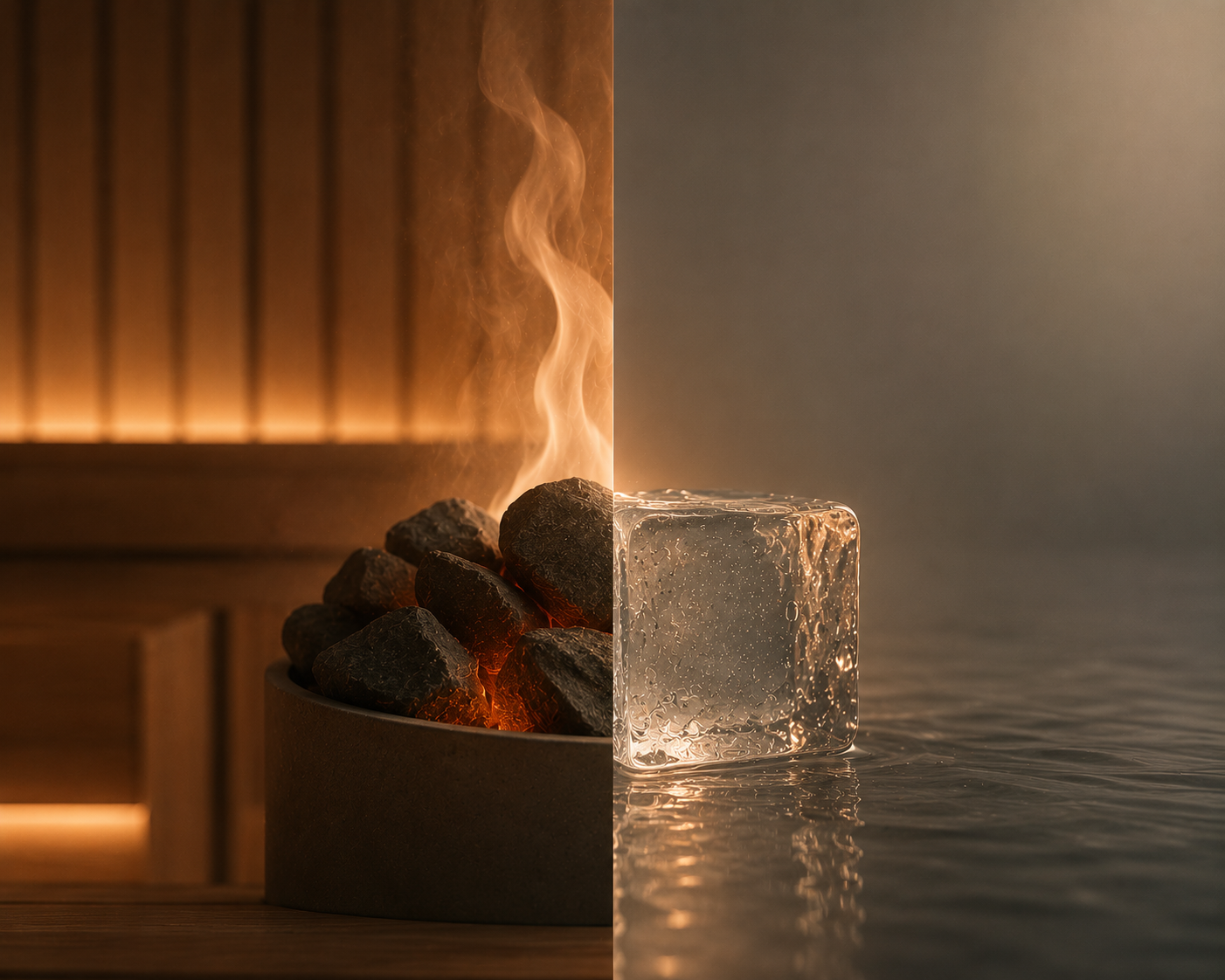
Contrast therapy is the intentional use of heat and cold—often moving between a sauna and cold plunge—to create a distinct physical and mental experience.
People have used thermal practices across cultures for centuries, from Finnish saunas and Japanese bathing traditions to Budapest’s historic thermal baths. Today, contrast therapy is gaining renewed attention among athletes, wellness communities, travelers, biohackers, and people simply looking for better ways to recover from the pressure of modern life.
But contrast therapy is not only about enduring extreme temperatures. When practiced intentionally, it creates a clear transition between activation and rest, intensity and stillness, challenge and recovery.
That relationship between opposing states is at the heart of Polarity.
Heat and cold place different demands on the body.
Sauna exposure raises skin and core temperature, increases heart rate, encourages blood vessels near the skin to widen, and produces perspiration. Cold-water immersion causes blood vessels near the skin to narrow and activates an immediate cold-shock response that can include faster breathing, increased alertness, and a rise in heart rate.
Moving between these environments creates noticeable changes in temperature, circulation, breathing, sensation, and mental state.
Although contrast therapy is often described as “regulating the nervous system,” the cold portion is initially activating—not instantly calming. The value lies in experiencing that activation in a controlled environment, working with the breath, and intentionally transitioning back toward rest and recovery.
Polarity is being designed around this complete process rather than treating the coldest plunge or longest sauna session as the goal.
Research into sauna bathing, cold-water immersion, and contrast therapy is continuing to develop. Results vary according to temperature, duration, frequency, individual health, and how the practice is used.
Potential applications include:
Cold-water immersion is commonly used after demanding physical activity. Research suggests it may help reduce perceived muscle soreness and improve some measures of recovery, particularly during the days following intense exercise.
Contrast water therapy has also shown potential for reducing soreness and supporting subjective recovery compared with passive rest, although the quality of the existing research varies.
This makes contrast therapy potentially useful for runners, cyclists, dancers, gym-goers, athletes, and physically active people who want to feel more recovered between sessions.
Heat causes blood vessels near the skin to expand, while cold causes them to narrow. These changes create a dynamic cardiovascular response as the body works to manage temperature.
Regular sauna bathing has been associated with several cardiovascular benefits, although many long-term findings are observational and should not be interpreted as proof that sauna alone prevents disease.
The warmth of a sauna can help the body feel less rigid and create a subjective sense of physical relaxation. For many people, the complete heat-and-cold cycle creates a clearer feeling of reset than passive relaxation alone.
One of the most practical benefits may be consistency. Entering a space specifically designed for recovery makes it easier to step away from work, screens, noise, and daily responsibilities.
Recovery often fails to happen because we never fully stop. A structured ritual gives it a place in our lives.
Modern life keeps many people in a near-constant state of input.
Notifications, work demands, artificial light, financial pressure, travel, noise, social media, and endless information require the nervous system to continually process and respond. Even when the body is physically still, the mind may remain alert.
Many people now operate somewhere between wired and exhausted—struggling to fully activate when they need energy or fully settle when they need rest.
Contrast therapy creates a tangible break in that pattern.
Temperature is difficult to ignore. Heat and cold pull attention away from looping thoughts and into immediate physical sensation.
This can create a rare opportunity to become fully present: noticing the breath, physical boundaries, internal reactions, and the moment the body begins to soften again.
Cold exposure produces real physiological activation. In an appropriate, controlled setting, people can practice meeting that intensity without immediately panicking or escaping.
The goal is not to override the body or prove toughness. It is to remain aware, breathe, recognize personal limits, and experience the return to safety afterward.
Over time, this kind of intentional practice may support greater confidence in navigating discomfort, although research into broader claims about emotional resilience remains emerging.
Many people report feeling more awake, clear, or mentally refreshed following cold exposure. Heat, meanwhile, is commonly associated with relaxation and decompression.
The movement between these states can make the contrast between activation and recovery easier to recognize—something that may feel increasingly difficult in everyday life.
Contrast therapy can serve different people for different reasons:
It does not need to be competitive or extreme. A useful practice is one adapted to the individual—not the person who can stay in the cold longest.
Budapest is internationally known for its thermal baths. The city already understands the cultural and social importance of water, heat, and communal restoration.
At the same time, there is a clear space between traditional public baths, luxury spas, athletic recovery facilities, and deeply intentional nervous-system care.
People increasingly want more privacy, clearer guidance, modern recovery technology, and experiences that acknowledge both physical and emotional well-being. Locals are navigating demanding urban lives, international residents are building lives far from their original support systems, and travelers often arrive carrying jet lag, fatigue, and sensory overload.
Polarity is being created to serve this evolving community while respecting the thermal identity already rooted in Budapest.
Polarity will bring private contrast-therapy suites to Budapest, combining sauna and cold plunge experiences with guided protocols designed around different intentions and experience levels.
The wider concept will also include community experiences, an event space, complementary recovery practices, and rooms for local wellness practitioners.
Rather than focusing exclusively on athletic performance or luxury relaxation, Polarity will sit at the intersection of physical recovery, nervous-system awareness, personal ritual, and community.
It will be a place to safely experience intensity, reconnect with the body, and make recovery something we practice before reaching complete exhaustion.
Sauna and cold-water immersion are not appropriate for everyone. Sudden cold exposure can cause hyperventilation and place significant demand on the cardiovascular system.
Anyone who is pregnant or has cardiovascular, blood-pressure, neurological, respiratory, or other relevant medical conditions should seek medical guidance before participating. Alcohol and recreational drugs should never be combined with sauna or cold-plunge use.
Polarity’s protocols will prioritize gradual exposure, informed participation, personal limits, and appropriate safety procedures rather than extreme temperatures or endurance challenges.
Polarity’s Indiegogo campaign officially opens for pledges on October 1. The campaign will help fund the first pilot studio and begin bringing this new approach to contrast therapy and nervous-system recovery to Budapest.
Join Early Access for reward previews, campaign news, launch reminders, and access to secret perks:
You can also follow the campaign on Indiegogo now. Following before launch helps demonstrate early support, ensures you are notified when pledges open, and makes you eligible for a free follower gift that can be redeemed when you make a campaign pledge:
Follow the Polarity Indiegogo campaign
Help us build a new culture of recovery in Budapest.